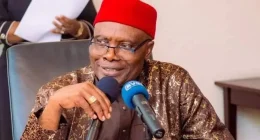
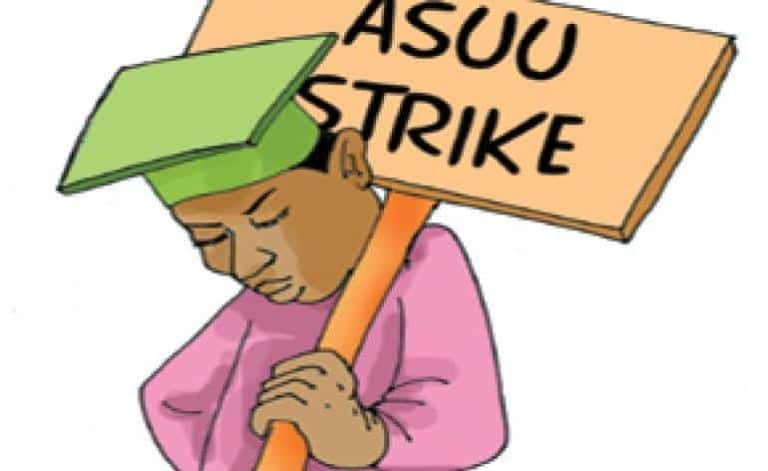
The Academic Staff Union of Universities (ASUU) is raising the alarm over a potential strike, accusing the Federal Government of failing to uphold its end of a long-standing agreement. ASUU President, Prof. Chris Piwuna, has stated that despite numerous meetings and a consistent willingness to negotiate, the government has shown a lack of commitment to implementing resolutions.
In a recent interview, Piwuna emphasized that dialogue has always been the union’s preferred approach. “We have always made ourselves available to government,” he noted. However, he lamented that none of the negotiated items, which include university funding, academic freedom, conditions of service, and autonomy, have been enforced. According to the union leader, the two sides have reached mutual consensus on these issues, but the government has yet to take definitive action to sign and implement the agreements.
The latest round of protests across university campuses nationwide serves as a clear indication of the growing frustration among lecturers. As ASUU leaders from various zones, including Akure, OAU, and others, have warned, the patience of academics has been pushed to its breaking point. These protests were held in anticipation of a crucial meeting scheduled with the government.
Mass Exodus of Professionals
Piwuna connected the government’s inaction directly to the mass departure of skilled professionals from the country. Lecturers and medical professionals, he said, are leaving Nigerian institutions in droves due to poor pay and substandard working conditions. He shared a personal observation from his workplace, the Jos University Teaching Hospital, where at least 20 consultants have relocated abroad in the past two years.
This trend, often referred to as ‘japa,’ is also evident in the academic community, with Nigerian lecturers taking up positions in universities in other African countries like Uganda.
Deteriorating Campus Infrastructure
Beyond the human capital flight, the ASUU president also pointed out the dire state of infrastructure in public universities. He argued that Nigerian institutions are lagging far behind their global and even continental counterparts. “Out of 333 universities in Nigeria, fewer than five are in the top 1,000 in Africa,” he stated, attributing the poor rankings to low salaries and a lack of infrastructural upgrades.
Piwuna’s concerns highlight a systemic problem, from inadequate classroom facilities to basic amenities, which he believes undermines the quality of education and the dignity of academics.
Strike as a Last Resort
Prof. Piwuna clarified that lecturers do not enjoy embarking on industrial actions. He stressed that strikes are a last resort, forced upon the union by the government’s consistent failure to address the issues. “Lecturers are not happy with strikes. Our students are our children,” he explained, noting that the entire academic community is affected.
He concluded with a call to action for all Nigerians—parents, media, religious and traditional leaders—to support the union’s demands for systemic reforms. Piwuna insisted that the fight is not just for ASUU but for the future of the nation’s educational system.