Nigerian Military Air Strikes Neutralize Senior ISWAP Commander and Eight Fighters in Sambisa Forest
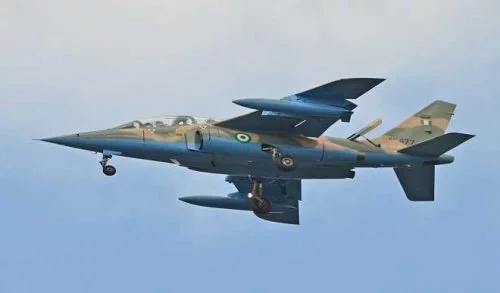
Targeted air strikes conducted by the Nigerian military in Borno State have reportedly killed nine fighters belonging to the Islamic State West Africa Province (ISWAP). Among those killed was a prominent senior commander responsible for coordinating movement and escorting high-ranking operatives through key enclaves in the Sambisa Forest.
The operation was carried out on Saturday, August 8, targeting terrorist strongholds around the Yuwe and Sabil Huda axes.
According to intelligence reports published by counter-insurgency analyst Zagazola Makama, one of the deceased commanders was identified as Qaid Abu Khalid Al Muhajir. Originally from Maiduguri, Abu Khalid was a key figure within ISWAP’s operational hierarchy, serving as a primary coordinator for high-value logistics and specialized convoy movements across the Sambisa axis.
Security sources indicated that Abu Khalid’s detailed knowledge of the terrain and transit routes made him vital to ISWAP’s mobility network, enabling senior leaders to move between operational sectors while minimizing their vulnerability to military detection.
Key Operational Highlights
-
Strategic Targets: The air strikes focused on known ISWAP enclaves in Yuwe and Sabil Huda within the Sambisa Forest axis.
-
Casualties: Nine ISWAP fighters were confirmed killed in the raid, with several others sustaining varying degrees of injury.
-
Link to Recent Attacks: Intelligence reports indicate that some of the targeted fighters were linked to a recent ambush against Nigerian troops along the Bita-Yamtage axis in Gwoza Local Government Area.
-
Disruption of Command: Security assessments suggest the elimination of Abu Khalid will significantly disrupt ISWAP’s internal communication lines, leadership transport, and overall tactical coordination across Borno State.
Military intelligence sources indicated that post-strike surveillance and reconnaissance operations are ongoing to assess the full extent of the damage and track surviving members of the affected cell.
As of the time of filing this report, official military spokespersons have not yet issued a formal statement, though the operation aligns with intensified offensive campaigns designed to dismantle the command structures and logistical networks of ISWAP and Boko Haram across northeastern Nigeria.