Human rights lawyer Deji Adeyanju has sparked debate by questioning whether Peter Obi’s measured approach to politics can challenge President Bola Tinubu in a future election, as Nigeria’s political landscape heats up ahead of the 2027 presidential race. Adeyanju’s remarks came in response to Obi’s recent interview on Arise News, where the former Labour Party presidential candidate critiqued Tinubu’s nearly two-year tenure, focusing on the country’s economic hardships and democratic setbacks.
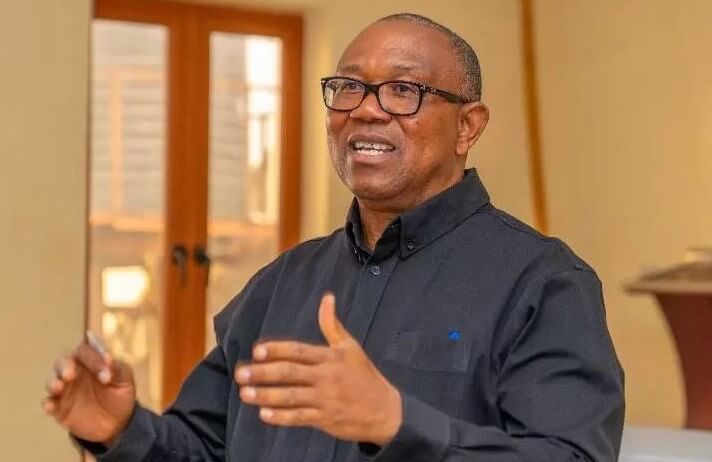
In a post on his X handle on Wednesday, Adeyanju wrote, “Peter Obi is on Arise talking calmly and gently about Nigeria. Nigerians acting like they are not aware sef. In today’s Nigeria, Obi is only good for beautiful speeches and motivational beautiful stories about China, etc. Only extremely rugged folks can contest against Tinubu.” The lawyer’s comments suggest that Obi’s composed demeanor and policy-focused rhetoric may lack the tenacity needed to unseat Tinubu, who won the contentious 2023 election as the All Progressives Congress (APC) candidate.
Obi, who finished third in the 2023 presidential race behind Tinubu and the Peoples Democratic Party’s Atiku Abubakar, has remained a vocal critic of the administration. His Tuesday interview highlighted the struggles Nigerians face daily, including rising fuel prices and insecurity, while questioning the state of democracy under Tinubu’s leadership. However, his analysis drew sharp criticism from Daniel Bwala, Special Adviser to the President on Policy Communication, who dismissed Obi’s remarks as factually weak and suggested the former Anambra governor is still reeling from his electoral defeat.
Fabian Onunaku, a former member of Obi’s 2023 campaign team, fired back at Bwala’s critique, defending his ex-principal’s stance. “You can spin it all you want, but Peter Obi spoke about what the people feel and live every day,” Onunaku said. “He spoke truth to power, something that even you will not understand, since you have swallowed your own vomit to become a defender of the indefensible.” Onunaku argued that attacks on Obi only bolster his popularity, adding, “The more you insult him, the more his support base increases. You people have absolutely nothing to offer Nigerians.”
The exchange underscores the deepening divide between Tinubu’s administration and opposition figures like Obi, who continues to command a loyal following, particularly among younger Nigerians disillusioned with the political establishment. Adeyanju’s assertion that only a “rugged” contender can take on Tinubu hints at the rough-and-tumble nature of Nigerian politics, where electoral success often hinges on robust grassroots mobilization and strategic alliances—areas where Tinubu excelled in 2023.
As Nigeria grapples with economic challenges and political uncertainty, Obi’s critique of the Rivers State emergency declaration during the same interview has further fueled debate. He called it an overreach that erodes democratic norms, a stance Adeyanju’s comments implicitly challenge as too mild to shift the power dynamics. With nearly two years until the next election, the question of whether Obi can adapt his approach—or if a fiercer rival will emerge—looms large over Nigeria’s opposition.
For now, Tinubu’s camp appears unfazed, with Bwala’s rebuttal signaling a readiness to counter Obi’s narrative. Yet, as Onunaku’s defense suggests, the former Labour Party leader’s resonance with the public may prove harder to dismiss, setting the stage for a contentious buildup to 2027.