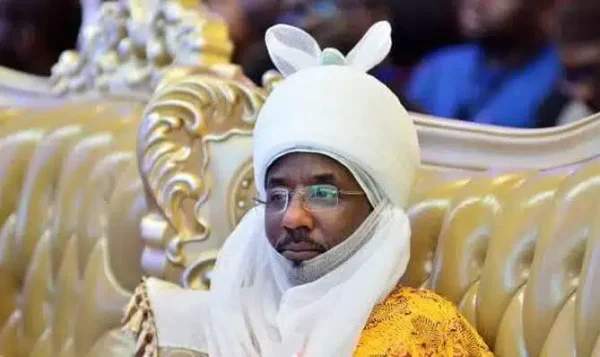
The Emir of Kano, Muhammadu Sanusi II, has asserted that Nigeria’s persistent security challenges—including Boko Haram insurgency, banditry, and general criminal activities—stem fundamentally from systemic ethnic, religious, and regional divisions fueled by political discourse and media narrative.
Speaking in Abuja on Wednesday during the public presentation of a book documenting the tenure of retired Lieutenant General Tukur Yusuf Buratai as Chief of Army Staff, the former Governor of the Central Bank of Nigeria urged leaders and citizens to look beyond armed violence when examining the roots of national insecurity.
Sanusi emphasized that violent movements initially found fertile ground not through arms, but through the normalization of divisive identity politics in national conversations.
“The fundamental point I wish to emphasize is that the security crisis in this nation did not commence with violence as we currently witness it, nor did it commence with banditry,” Sanusi stated. “It did not commence with Boko Haram and terrorism. It originated with the violence inherent in language that appeared in newspapers and emanated from political discourse, wherein we commenced categorising ourselves not as Nigerians, but as Northerners and Southerners, Muslims and Christians, Yoruba and Igbo and Hausa, thereby establishing an environment that facilitated the emergence of these movements.”
The traditional ruler further called for a clear separation of governance from religious affairs, pointing out that political figures should focus strictly on socio-economic responsibilities while religious leaders remain outside active politics. He warned that the overlap between religious leadership and partisan politics compromises institutional integrity and enables vested interests to exploit national instability.
Concluding his address, Sanusi advocated for long-term strategic planning for key state institutions. He noted that crucial sectors—such as the military, the police, and the central bank—must operate on 20-to-50-year vision plans rather than aligning their strategy with short-term four-year electoral cycles.